Banco Santander × IE Business School
Spain’s most trusted bank meets the ones still deciding.
- Setting
- Group consulting project, IE Business School
- Work
- Client retention
- Mobile app redesign
- Growth hacking
Spaniards rarely switch banks. Secondary research made that clear, and made the target obvious. Not the customers Santander already had, but the generation that had never chosen a bank at all.
The brief was retention against fintech and mobile-first banking. We read it as a question about first impressions.
01Research
We asked before we designed.
In-depth interviews, survey data, and multiple focus groups. A UX study of the existing Santander app. A comparative analysis across top Spanish banks, global banks, fintechs, and alternative banking options.
02Analysis
Coded, cross-read, mapped.
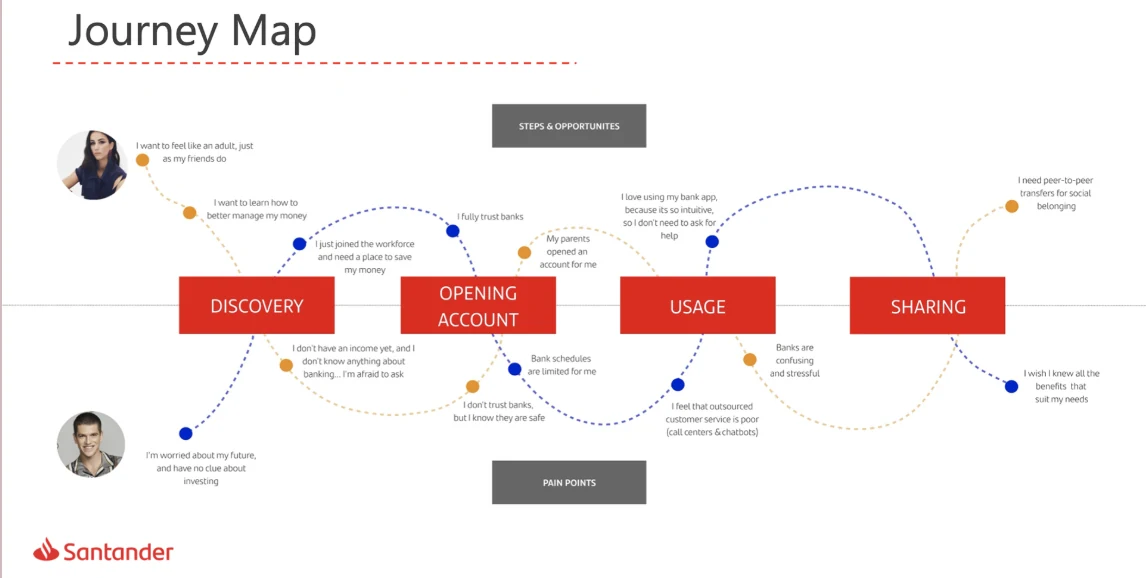
Qualitative and quantitative data coded together, then built out as personas, journey maps, and empathy maps until the customer stopped being an abstraction.
03Two insights
They want a bank that knows them, and teaches them.
Be your own boss: a multi-channel, four-pillar plan to hold Gen Z clients, and attract the ones Santander did not have yet.
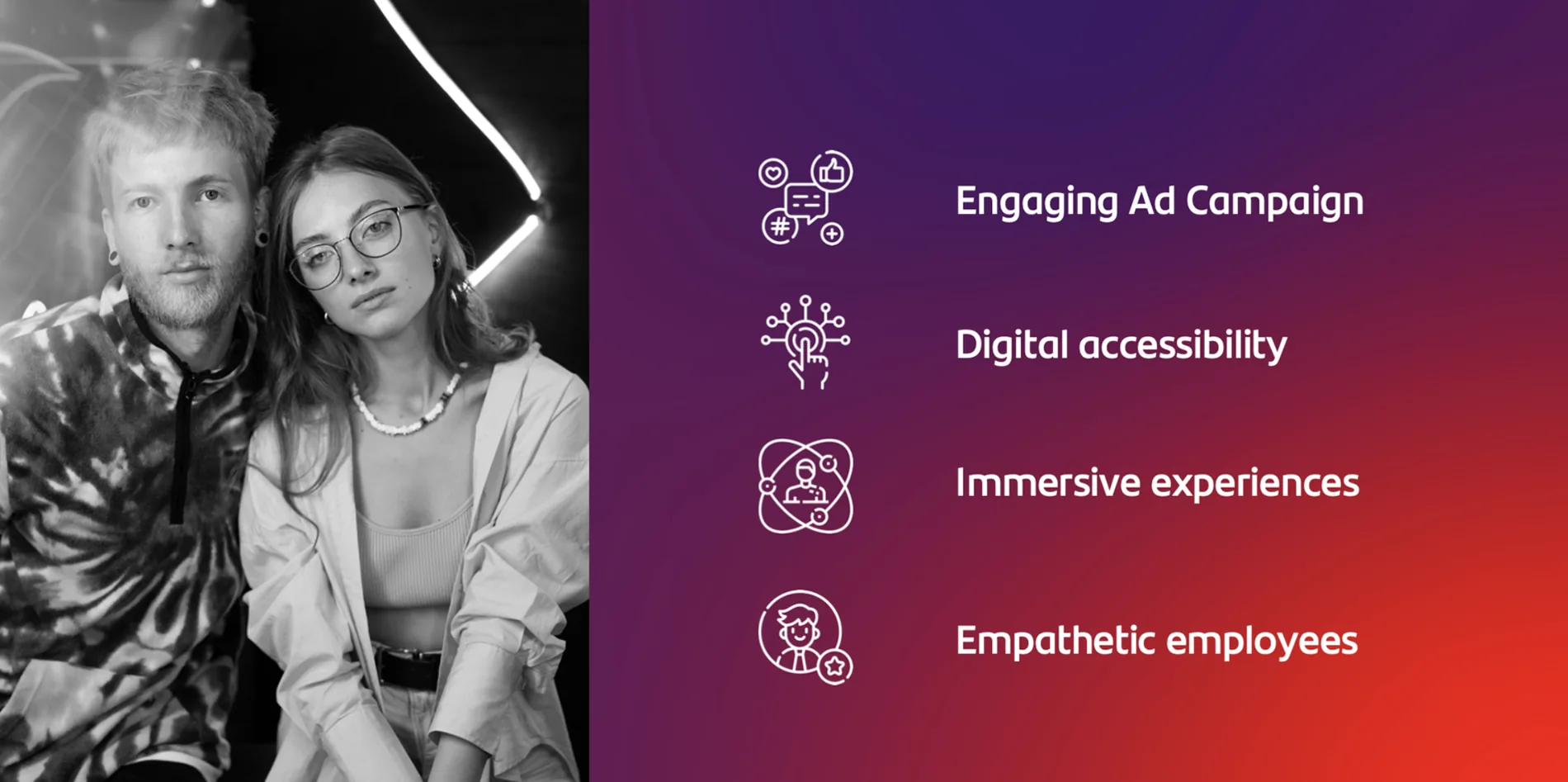
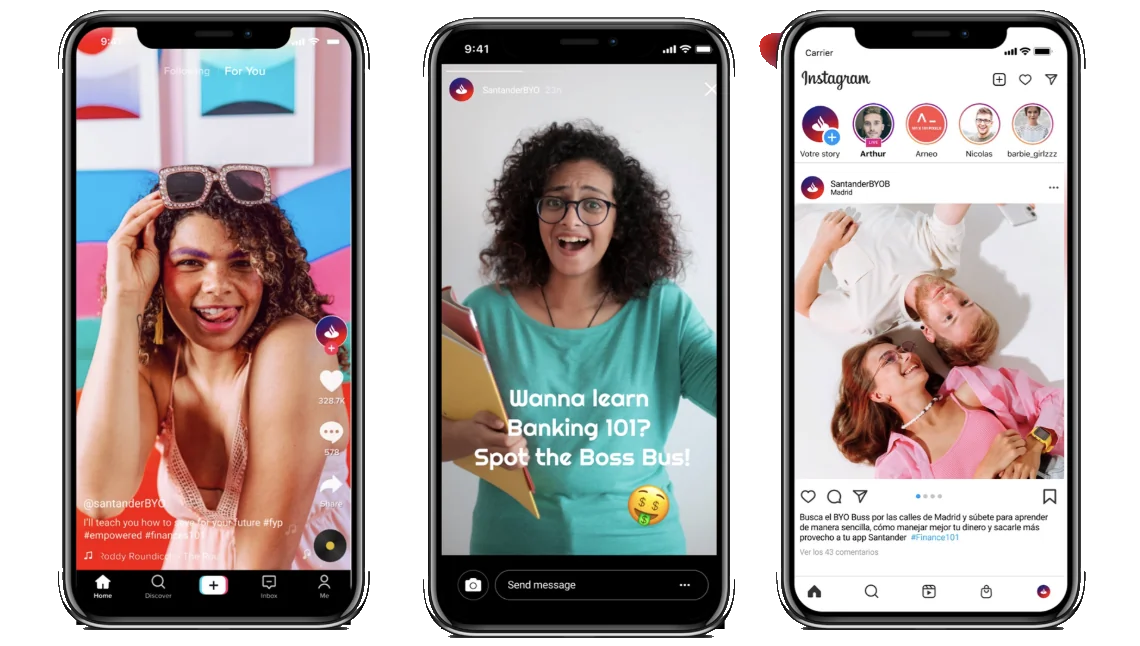
A fresher bank, in the feed.
Brand presence on the channels Gen Z already lives on, carrying Be Your Own Boss content.
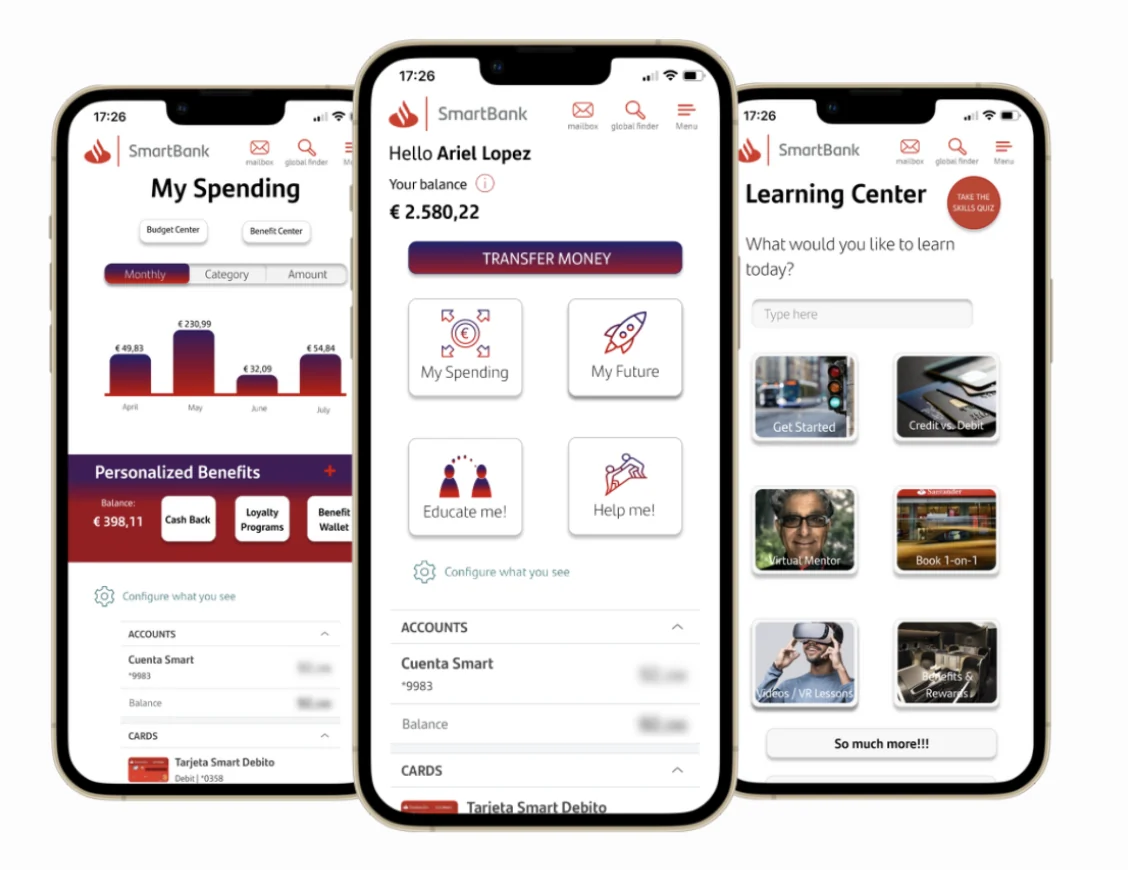
Everything that matters, on arrival.
Gen Z expects information immediately. The app’s front page was rebuilt around the program’s key values: educational videos, meetings, transfers, and planning for the future. No digging.
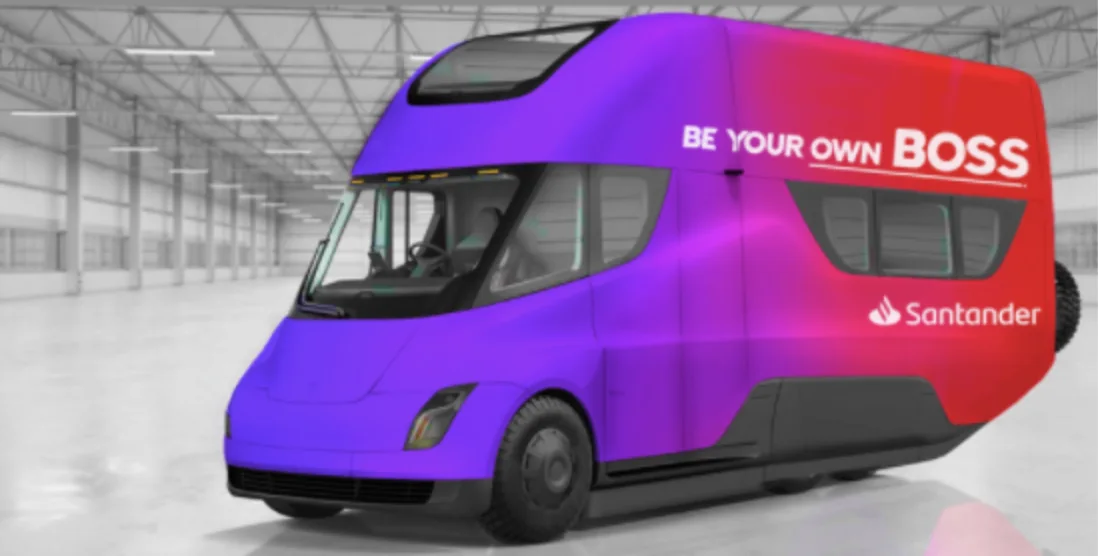
They hated going to the bank. So the bank went to them.
A mobile branch in Madrid, parked where Gen Z already is, and where underbanked neighbourhoods have no branch at all.

Nobody should feel dumb asking about money.
Much of Gen Z’s anxiety was about the literacy gap between them and older bank staff. The bus crew was designed to invert it: close enough to be trusted, excited for first-time bankers. The wider culture change sat outside our scope.